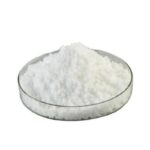
The use of food-grade Sodium Tripolyphosphate (STPP, often designated E 451(i) in Europe) in processed foods continues to draw attention from formulation technologists, regulatory teams and food processors. This article presents a regional comparative overview of STPP’s performance in food across Europe, the Americas and Southeast Asia. Emphasis is placed on market trends, application demand, regulatory status and practical implications for the food processing engineer.
Market Overview and Regional Distribution
According to market-research data, global STPP consumption in 2023 already included a notable volume in food-industry applications. One source estimates that food-processing use of STPP in 2023 exceeded 85 000 metric tons, albeit without a full breakdown by region. :contentReference[oaicite:1]{index=1}
A further segmentation indicates that the Asia-Pacific region (which includes Southeast Asia) accounted for approximately 40-45 % of total STPP market revenue in 2023, followed by North America at around 20-25 % and Europe at roughly 15-20 %. :contentReference[oaicite:2]{index=2} While that figure covers all applications of STPP (not exclusively food), it signals the relative importance of the Asia-Pacific region in demand growth.
For food-grade STPP specifically, its share remains lower than industrial grades (e.g., detergent, water-treatment use), yet its growth rate is stronger. One report estimates food-grade STPP represented about 20-25 % of the total STPP market in 2023 and was the fastest-growing sub-segment. :contentReference[oaicite:3]{index=3}
From a strategic point of view for food technologists: the higher growth of food-grade STPP means that attention must shift to not just functional performance (e.g., moisture retention) but also regional regulatory compliance and supply-chain purity (heavy metals, etc.).
Europe: Mature Market, Tight Regulation
In Europe, the regulatory environment for food additives is well established. The general additive regulation for food is Regulation (EC) No 1333/2008 and the specifications regulation is Commission Regulation (EU) No 231/2012 which sets purity criteria, origin and other identification details. :contentReference[oaicite:6]{index=6}
The additive category covering STPP is E 451(i) (pentasodium tripolyphosphate) among the phosphates (E 450–452). The European Food Safety Authority (EFSA) published in June 2019 a statement that total dietary exposure to phosphate additives may exceed safe levels, and recommended maximum permitted levels in food supplements. :contentReference[oaicite:8]{index=8} While this does not exclusively target STPP, it signals that food-processors in Europe should monitor phosphate intake when using STPP in applications such as water-binding or texture modification.
From an application view, food processing in Europe tends to prioritise regulatory compliance, transparent labelling, and increasingly, clean-label alternatives. As a result, growth of STPP in food may be more modest compared to emerging regions, especially where replacement technologies or lower-phosphate strategies are gaining ground.
Americas: Balanced Demand and Regulatory Nuance
In the Americas (North and Latin America), demand for processed and convenience foods supports STPP use. Although publicly available food-grade STPP figures specific to the Americas are scarce, one general market study notes that North America is expected to grow thanks to food‐processing applications and water-treatment sectors. :contentReference[oaicite:9]{index=9}
From a regulatory standpoint, in the United States the Food and Drug Administration (FDA) authorises STPP under certain food categories. For example, one reference suggests STPP in cured meats at up to 0.5 % and in seafood at up to 2 % of product weight. :contentReference[oaicite:11]{index=11} Technicians must verify the specific regulation in 21 CFR sections or applicable state regulation.
For Latin America, guidance is more fragmented: national standards differ, and multinational formulators need to verify each country’s food-additive list and acceptable use level. The growth of processed-seafood and frozen prepared meals in Southeast Latin America suggests increasing interest in moisture-retention additives such as STPP.
Southeast Asia: Rapid Growth, Opportunity and Complexity
The Southeast Asian market (including countries such as Thailand, Vietnam, Indonesia, Malaysia, Singapore) offers strong growth potential for food-grade STPP. Rapid urbanisation, rising disposable income, expansion of seafood and poultry processing plants, and increased frozen-meal consumption all support demand. Although precise regional figures for food-grade STPP are difficult to locate, the overall APAC region dominated the STPP market share in 2023 (≈ 40-45 %) ─ illustrating appetite for the technology. :contentReference[oaicite:12]{index=12}
For technicians, this region demands special attention to supply-chain quality (phosphate purity, heavy-metal specs), logistics (import/export customs, tariffs), and localisation of regulatory compliance (each country may have its own additive list or food-additive regulation). Many processors in Southeast Asia adopt STPP for seafood moisture retention, given proximity to major export markets.
Functional Performance & Application Insights
From a food-processing perspective, STPP delivers key functionalities: improving water-holding capacity (WHC), reducing cooking loss, enhancing texture and yield, and stabilising proteins in meat, poultry and seafood products. For example, STPP is described as “mainly used for retaining moisture in fish” in an additive-use reference. :contentReference[oaicite:13]{index=13}
Important for technologists: effective use of STPP requires correct grade (food-grade), strict adherence to permitted levels, and attention to synergy with salt, phosphates, pH, and processing parameters (e.g., injection, tumbling, freezing). Because regions differ in acceptable levels, one cannot simply apply a formula valid in Europe to a plant in Vietnam without adjustment.
Also of note: given regulatory and consumer pressure for “clean-label” formulations, companies are exploring partial replacement of STPP with alternatives (e.g., low-phosphate blends, enzyme systems, natural hydrophilic fibres). While replacements may reduce phosphate exposure, they may also increase cost or reduce yield — so trade-offs must be managed.
Regulatory & Quality Considerations for Food-Grade STPP
For a food-technician or compliance manager, the following checklist is critical when specifying STPP for food use:
- Confirm the additive grade: Only food-grade STPP must be used in food processing (industrial grade may contain higher levels of impurities). :contentReference[oaicite:14]{index=14}
- Check purity and heavy-metal limits: For example, in Europe Regulation (EU) No 231/2012 sets specifications for food additives listed in Annex II and III to Regulation (EC) No 1333/2008. :contentReference[oaicite:15]{index=15}
- Verify country-specific allowable food category uses and maximum usage levels: While Europe has the overarching framework via Annexes of EC 1333/2008, in other regions you may need to verify national food-additive lists or standards. :contentReference[oaicite:16]{index=16}
- Monitor total phosphate intake: In Europe EFSA flagged that total dietary exposure to phosphate additives may exceed safe levels, which suggests risk of cumulative exposure when STPP is heavily used. :contentReference[oaicite:17]{index=17}
- Ensure labelling compliance: Even if allowed in food, processors must ensure that ingredients, additive names or E-numbers (where applicable) are declared per country regulation.
- Supply-chain traceability: Especially in markets with less mature regulation (some Southeast Asian countries), ensure that the importer/supplier provides certificates of analysis (COA), origin of phosphate rock, impurity profiles, and compliance with local regulation.
Implications and Best Practices for Technologists
Given the above regional insights, the following recommendations apply for food-processing technologists engaged with STPP in meat, seafood, poultry or frozen convenience-meal operations:
- Perform region-specific regulatory due diligence before applying any formulation change: a level acceptable in the U.S. may not be valid in the EU or Southeast Asia.
- When launching a product for export, design the formulation to satisfy the most restrictive region in the supply chain. For example, if the product is manufactured in Southeast Asia for export to Europe, then the European criteria should drive the additive level and documentation.
- Optimize the functional dose of STPP: Use just enough to achieve the required performance (yield, texture, juiciness) and avoid excessive use which may raise cost, label complexity or regulatory risk.
- Consider staging an alternative/phosphate-reduced formulation plan: Given the global trend toward reduced-phosphate or clean-label additives, work with R&D to evaluate cost, sensory impact and regulatory implications of reducing STPP or substituting partially.
- Maintain documentation and audits of supplier certificates of food-grade status, heavy-metal and impurity data, traceability and registration status in each target market. This becomes more critical in fast-growing markets like Southeast Asia.
In summary: STPP remains a valuable food-processing additive offering significant functional benefits. But its regional performance is shaped not only by demand growth (strongest in Southeast Asia) but also by regulatory stringency and consumer/market trends (particularly in Europe). Technologists should adopt a region-aware mindset combining functionality, compliance and supply-chain assurance.