Is Sodium Tripolyphosphate Safe?
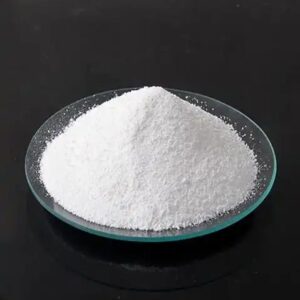
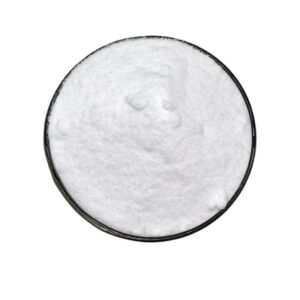
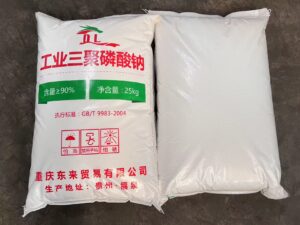
Sodium tripolyphosphate (STPP) is a common chemical compound used in detergents, food processing, and industrial applications.
This article analyzes the differences in phosphorus content regulations in core markets such as China, the European Union, and Brazil, compares the cost-effectiveness of alternatives such as zeolite and sodium citrate, and provides corporate compliance production strategies and environmentally friendly STPP research and development directions to help manufacturers achieve green transformation.
Sodium tripolyphosphate (STPP) was once the core ingredient of detergent formulas due to its excellent water-softening and decontamination capabilities. However, its phosphorus emissions have led to the eutrophication of water bodies, prompting more than 50 countries worldwide to introduce phosphorus restriction policies. According to the Global Phosphorus Chemical Trend Report, phosphorus restriction regulations will drive the detergent industry to reduce phosphorus emissions by 120,000 tons annually from 2023 to 2030.
As a manufacturer, we can only balance environmental protection and the market by accurately grasping policy dynamics and developing adaptive technologies.
1. EU: The world’s most stringent standards lead industry change
Regulatory requirements: household detergent phosphorus content (in terms of P₂O₅) ≤ 0.5%, industrial cleaning agent ≤ 2.1% (planned to drop to 1.8% in 2023).
Enforcement: Violating companies face a fine of up to 4% annual turnover. In 2022, a German brand was fined 3.2 million euros for exceeding the standard.
2. China: Deepening of regional step-by-step management
National standard: The total phosphorus of ordinary laundry detergent is ≤ 1.1%, but Taihu Lake, Chaohu Lake, and other basins implement the “phosphorus ban” (≤ 0.5%).
Policy expansion: From 2025, commercial washing scenes such as hotels and hospitals will be included in the phosphorus limit range.
3. Brazil: Environmental transformation opportunities in emerging markets
Current standard: Detergent phosphorus content ≤ 6.0%, but in 2025, it will refer to the EU’s graded phosphorus limit.
Market gap: 70% of local products are still high-phosphorus formulas, and the annual growth rate of demand for alternatives is 18% (data source: ANVISA).
| Solution | Cost (USD/ton) | Performance Drawback | Applicable Scenario |
| 4A Zeolite | 450-550 | Calcium and magnesium ion exchange efficiency decreases by 40% | Powdered detergent for low-hardness water areas |
| Sodium Citrate | 1,200-1,500 | Chelation ability decreases by 30% | Food-grade liquid detergent |
| GL-47-S | 2,800-3,200 | Insufficient stain removal at low temperatures | Premium laundry pods |
Corporate response strategies:
Short-term: Use “STPP+zeolite” compound (ratio 3:7), phosphorus content reduced by 40% and cost increase ≤15%.
Long-term: Invest in modified STPP research and development (such as nano-coating technology) to improve environmental compatibility.
1. Accurate testing: guarding the first line of defense for compliance
Spectrophotometry (GB 11893-89): suitable for routine testing, with an error rate of ≤3%.
ICP-MS method: the detection limit is as low as 0.01mg/L, meeting EU export requirements.
2. Formula optimization: the secret to balancing performance and cost
Efficiency enhancement technology: adding polycarboxylates (such as acrylic acid-maleic acid copolymers) to compensate for the dispersion ability of STPP after the reduction.
Synergistic solution: STPP is compounded with sodium silicate to increase the decontamination index by 15%-20%.
3. Supply chain upgrade
Purchase low-phosphorus STPP (P₂O₅≤45%), sign environmental compliance agreements with suppliers and avoid raw material risks.
1. Biodegradable STPP: from laboratory to industrialization
Enzymatic hydrolysis process: using lipase for directional decomposition, the 28-day biodegradation rate increased from 35% to 72%.
Case: The “STPP-cellulose complex” developed by a European company in cooperation with the Technical University of Munich shortens the degradation cycle to 15 days.
2. Modified STPP technology
Coated STPP: A silica coating reduces the phosphorus release rate, and the phosphorus concentration in wastewater decreases by 50%.
Ion exchange STPP: Potassium ions replace sodium ions, improving environmental friendliness while maintaining pH stability.
3. Commercialization of phosphorus recovery system
The STPP wastewater recovery pilot line of BASF in Germany has a phosphorus recovery rate of over 85%, and the cost is 30% lower than that of mineral extraction.
Phosphorus restriction regulations are both a challenge and an opportunity for industry reshuffle. Enterprises need to adopt a three-level strategy:
Compliance foundation: meet current regulations through precise testing and formula adjustment;
Technology breakthrough: deploy biodegradable STPP and recycling technology to seize the green market;
Global collaboration: formulate differentiated solutions for different markets (such as promoting compounding technology to enter Brazil and focusing on modified STPP to break through the EU).
(Data sources for this article are the EU Gazette, China’s Ministry of Ecology and Environment, and Grand View Research, and the cases have been desensitized.)

Sodium tripolyphosphate (STPP) is a common chemical compound used in detergents, food processing, and industrial applications.

Sodium tripolyphosphate (STPP) is manufactured through controlled reactions of phosphoric acid and sodium compounds, with patented industrial processes optimizing purity and yield.

Sodium tripolyphosphate is a powerful detergent additive facing scrutiny for its environmental impact, prompting innovation in green alternatives and policy shifts.

Sodium Tripolyphosphate (STPP) serves as a crucial food additive that improves texture, moisture retention and shelf life in processed seafood and meat products.

This guide covers the uses, benefits, risks, dosages, and health concerns of polyphosphates in food, with an overview of regulatory standards and emerging alternatives.

Sodium Tripolyphosphate Environmental Impact: A deep dive into STPP-induced water eutrophication and effective wastewater treatment solutions to mitigate pollution and protect ecosystems.

Toxicological studies and global regulations are reshaping the future of sodium tripolyphosphate, once hailed as a chemical miracle in detergents.

Sodium Tripolyphosphate (STPP) revolutionized detergents but caused eutrophication. Discover its history, environmental bans, and modern phosphate-free alternatives.

A professional and educational overview of tripolyphosphate (STPP), explaining its composition, manufacturing process, applications, safety profile, and sustainability trends.

This guide provides insights into the technological advances, regulatory frameworks, and cost factors affecting food and aquatic products, highlighting sustainability challenges and opportunities in 2025.

This guide covers the uses, benefits, risks, dosages, and health concerns of polyphosphates in food, with an overview of regulatory standards and emerging alternatives.
WhatsApp us